Analogical / Acoustic Study
Reciprocating compressor piping systems are highly sensitive to pulsation and vibration effects caused by dynamic pressure fluctuations. If these effects are not properly considered during the design stage, they may lead to excessive vibration, fatigue damage at branch connections, and even premature failure of piping components. For this reason, an analogical (acoustic and pulsation) study plays a critical role in evaluating the dynamic behavior of compressor piping systems. Such studies help engineers understand the relationship between excitation frequencies and the natural frequencies of piping spans, allowing proper support placement and layout optimization. This article outlines the key information, documents, and design considerations required for performing an effective analogical study and highlights the fundamental principles for supporting vibrating piping systems in accordance with Natural Frequencies of Piping Spans (NFPS).
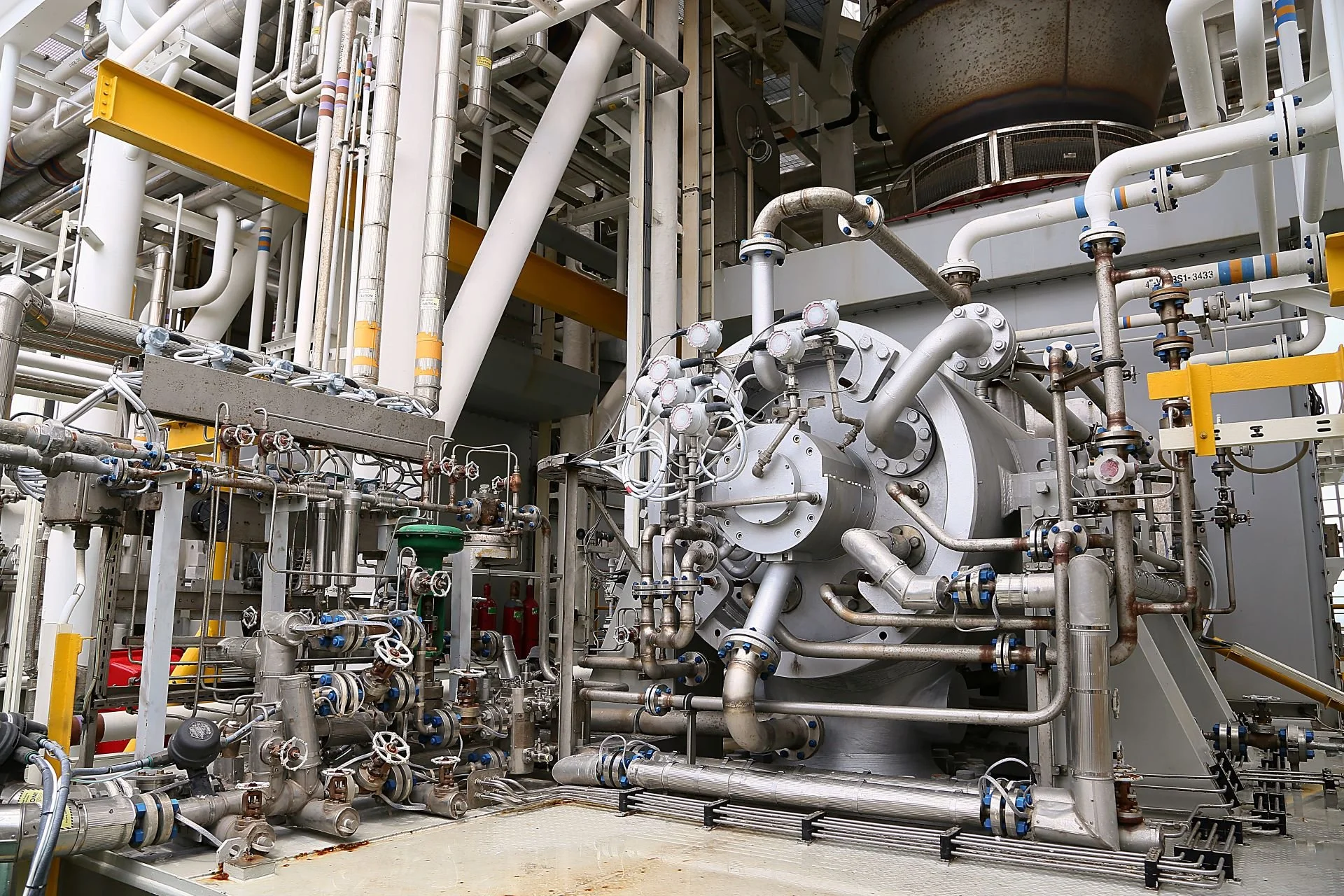
Reciprocating Compressor
Reciprocating compressor piping systems are highly sensitive to pulsation and vibration effects caused by dynamic pressure fluctuations.
The following information must be obtained:
a. Discharge pressure
b. Compressor driver horsepower
c. Number of stages per compressor
d. Number of parallel compressors
e. Criticality of service (toxicity or flammability)
f. Design philosophy of the project and the client
The entire piping design must be completed before performing the acoustic study.
The following documents must be obtained:
a. Process flowsheet
b. Piping and Instrumentation Diagram (P&ID)
c. Piping Isometric Drawings
d. Compressor Data Sheet
e. Pulsation Bottle Drawings
f. Vessel Drawings
g. Exchanger Drawings
h. Orifice and Control Valve Pressure Drops
• If there are any changes in pipe diameter, pipe length, valve location, orifice plate location, or the dimensions of vessels and heat exchangers, the acoustic study must be reviewed and performed again.
Considerations for Vibrating Piping Systems
The following points should be considered in piping designs for vibrating lines:
• Do not use unreinforced branches.
• Eliminate as many bends as possible.
• Avoid long overhangs and long unguided risers.
• Group pipelines together as much as possible and run them as close to grade as practicable.
• If necessary, trunnions used for supports may be smaller than the main pipe size to increase stiffness.
• Clamp anchors shall not be used for supports that anchor or stop pulsating lines.
• Adjustable wedge-type supports should be used for volume bottles located directly under compressor cylinders.
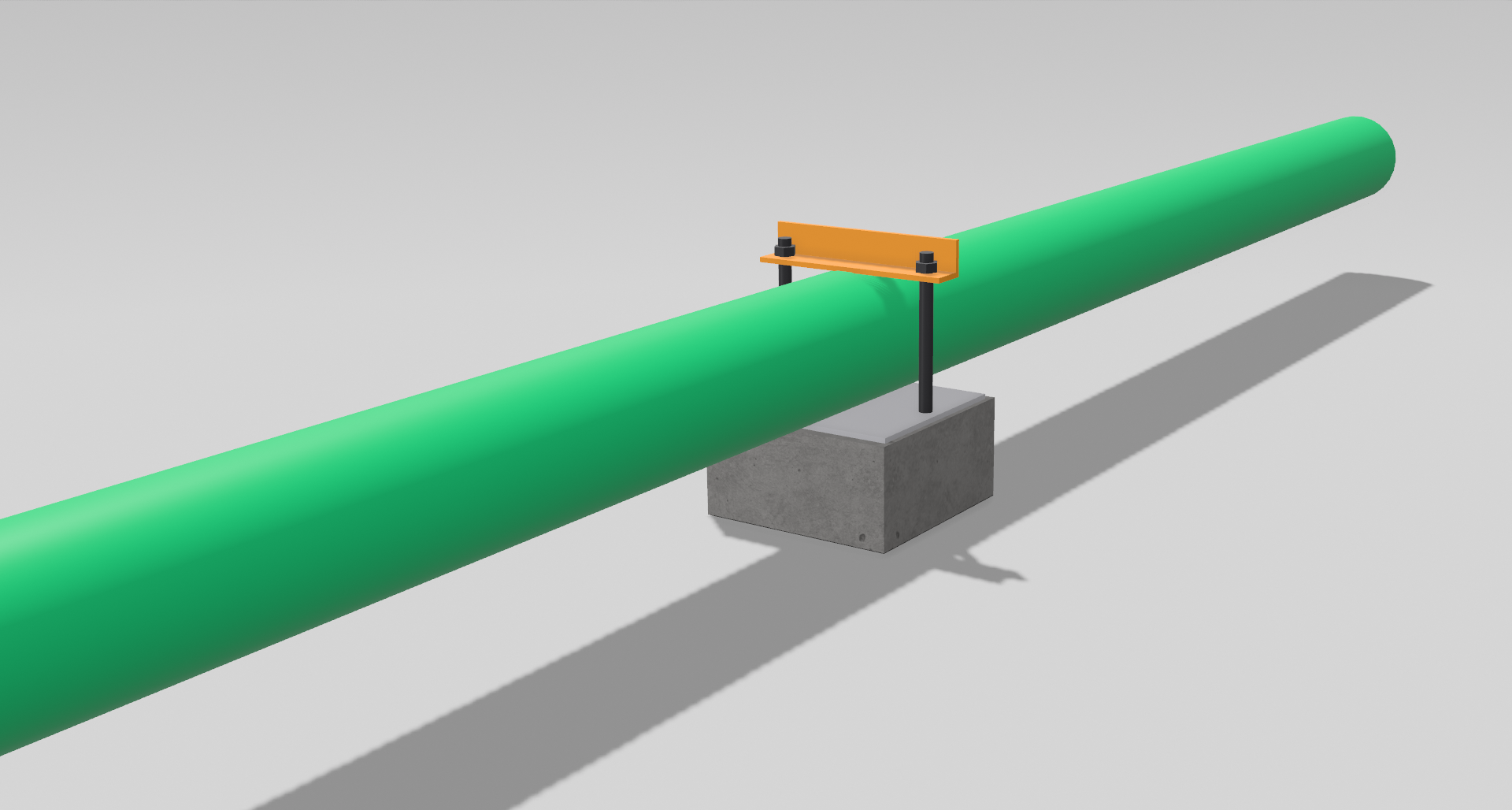
Hold-Down Support
Location of Supports for Vibrating Lines
Vibrating or acoustic lines should be supported vertically at locations where vibration occurs.
Hold-down supports are more effective for supporting vibrating lines.
Support locations should be selected in accordance with the Natural Frequencies of Piping Spans (NFPS).
Support Design According to NFPS
The following points should be considered when determining support locations based on NFPS:
Supports should be installed at all heavy points.
Reducers, tees, and branch connections must be protected.
Supports should be installed at locations where the pipe routing direction changes (such as elbows).
Supports should be positioned so that spans do not have identical natural frequencies.
Anchors or stoppers should be applied to each branch of the line.
Vibrating lines must never be connected to buildings or platforms. Their foundations should be independent from other structures.
You can watch the related video by the link below;