How to Plan Piping Isometric Drawing Production (Step-by-Step Guide)
Piping isometric drawings are not just engineering deliverables — they are the backbone of fabrication and construction execution.
In many projects, delays, rework, and cost overruns can be traced back to poorly planned isometric production.
Despite this, isometric drawing generation is often treated as a simple drafting activity rather than a structured, managed workflow.
This is a critical mistake.
In this blog, we will explore how to plan piping isometric production effectively by combining engineering best practices with project management principles.
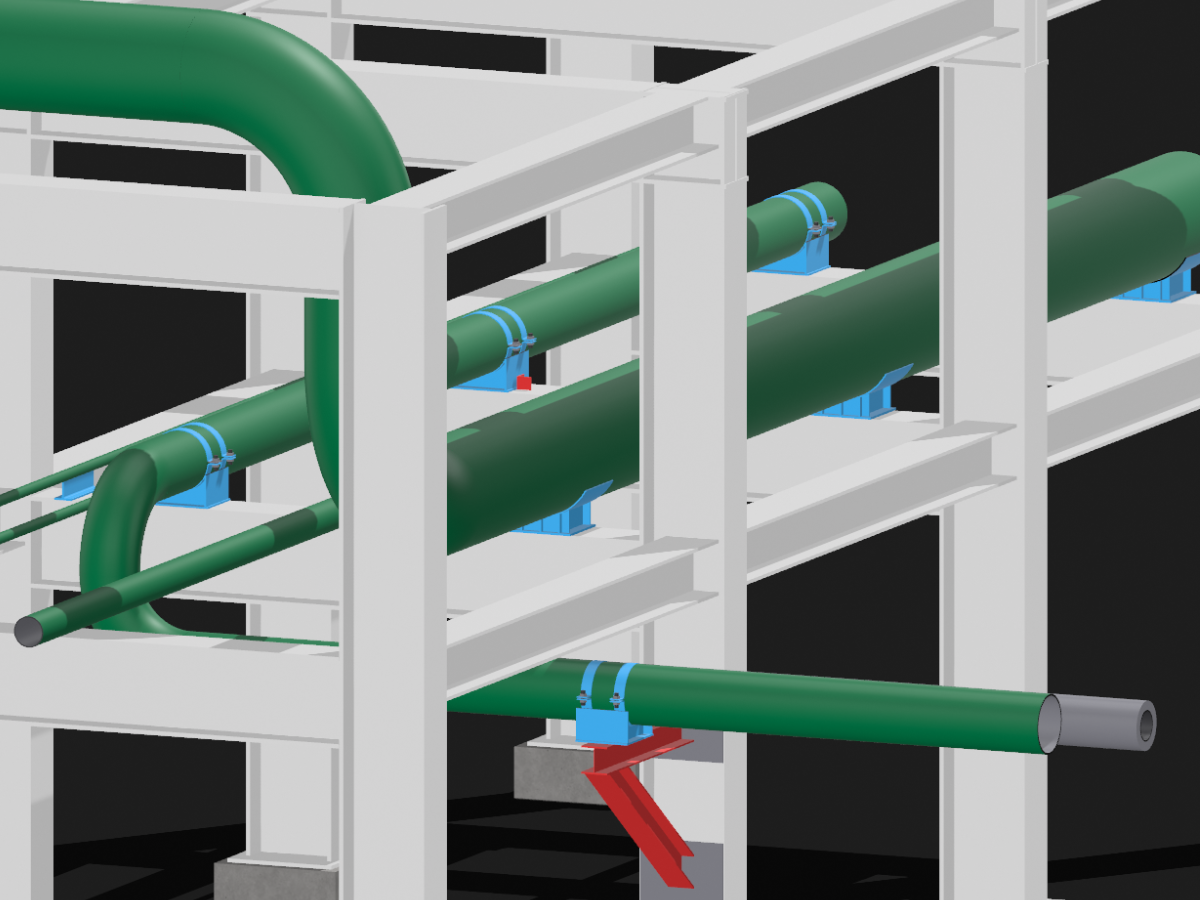
Piping Isometric Production
This blog explains how to plan isometric drawing production effectively by integrating engineering practices with project management principles.
1. Understanding the Role of Isometric Drawings
Before planning begins, it is essential to clearly define the purpose of isometric drawings within the project.
Isometric drawings are used for:
Fabrication of piping spools
Material take-off (MTO)
Installation and erection activities
Supporting stress analysis and field verification
Piping integrity checks for the handover process after construction.
Detailed identification of piping materials, including all fittings, instruments, and in-line equipment.
Site progress measurements
Isometrics are directly used in fabrication yards and construction sites; any error or delay in isometric drawings has immediate downstream impacts.
2. Establishing the Workflow
A well-defined workflow is essential to ensure consistency and efficiency.
A typical isometric production workflow is listed below. Each stage must have clear ownership.
Model completion (3D design freeze level)
Clash Check (with the help of 3D Software, like E3D)
Isometric extraction from the model
Drafting and detailing
Internal checking
Stress analysis and supporting input
Model update as per stress engineering input
Back-check (Stage 4)
Final review and approval
Issue for fabrication (IFC)
In many EPC projects, isometric production becomes a bottleneck when model maturity and stress inputs are not aligned. This misalignment often leads to repeated rework cycles between design and stress teams.
3. Planning
According to the productivity metrics (e.g., number of isometrics per week per designer) and the WBS (Work Breakdown Structure), a baseline plan must be prepared/scheduled. Once the metrics are identified, the project's complexity should also be considered.
Isometric production is highly resource-dependent. Proper allocation of manpower is critical. In proper planning, the following resources must be considered.
Number of designers/drafters
Experience level of the team
Availability of stress engineers for coordination
Checker and approver capacity
From a PMI perspective, this phase corresponds to the Planning Process Group, where scope, schedule, and resource planning are formally defined.
4. Scope of Work
A proper plan starts with a clear definition of scope. The key questions are the number of lines, the systems, and the level of detail.
At this stage, inputs from P&IDs, 3D models, and line lists must be consolidated.
A Work Breakdown Structure (WBS) can be created by:
Area / Unit
System
Line class or service
Material Type (CS or SS)
This allows better tracking and control throughout the project.
5. Scheduling and Prioritization
Not all isometrics should be produced at the same time. Several factors are to be considered for prioritizing.
Prioritization should be based on:
Construction sequence (Area / Elevation)
Fabrication priorities
Critical lines
Critical equipment connections
Line Size (Larger lines are priority)
Early release of critical lines can significantly improve project schedule performance because all equipment connections are made, so vendor information for long-lead items will not be impacted. Additionally, the critical lines are mostly large bore, so it is better to finalize earlier, because the large bores have priority for constructability.
In real projects, large-bore lines connected to critical equipment (e.g., air coolers, vessels, compressors) should be prioritized, as they often drive both fabrication and installation sequences.
From a project management perspective, this is closely linked to the “Critical Path” which directly impacts the project completion timeline.
6. Producing the Isometrics (Execution)
Isometrics production requires reviewing the company's knowledge and lessons learned, which we call “Organizational Project Assets (OPA)”.
Based on the resources mentioned above, a team must be developed. The Lessons Learned Register, company templates, and related knowledge must be shared with the team, and the team must also be informed about the client's requirements and expectations.
All necessary requirements must be provided and controlled regarding the availability of a license or any software.
During production, interdisciplinary communication must be maintained (i.e., between piping and process or between piping and structural).
Also, communication must be maintained with the stakeholders (i.e., client, fabrication contractor).
7. Quality Control and Review Process
Errors in isometric drawings are costly. Therefore, a strong quality control process is essential.
Key elements:
Independent checking procedures
Standardized checklists
Coordination with stress analysis results
Clash verification with 3D model
Common issues to avoid:
Incorrect dimensions
Missing supports
Inconsistent line numbers
Fabrication infeasibility
Clashes with other members.
Missing updates on P&IDs or Line Lists.
Quality should be built into the process, not inspected at the end; this is why preventive actions listed above are very important.
8. Change Management
Design changes are inevitable in any project. A structured change management process must be implemented to handle. Potential changes are;
Model revisions
Site feedback
Client comments
Stress analysis updates
Each isometric revision must be:
Clearly tracked and recorded
Communicated to all stakeholders
Reflected in the latest issued drawings
Failure to control revisions can result in fabrication errors and rework.
9. Integration with Other Disciplines
Isometric drawing production does not happen in isolation.
Close coordination is required with:
Stress analysis and support design team
Structural and equipment design team
Construction and fabrication team
Regular coordination meetings help to resolve issues early and avoid downstream conflicts. A focal person should be assigned for the interface. This will help the coordinator provide a quick response and prevent delays in construction.
10. Monitoring and Performance Control
Monitoring and control are the most valuable processes for a Project Manager. The KPIs should be identified and shared with all stakeholders.
Key performance indicators (KPIs) include:
Number of isometrics modelled, drafted, stress checked, issued, and planned
Rework percentage
Revision frequency
On-time delivery rate
Additional KPIs may include:
• Average cycle time per isometric
• Bottleneck identification between drafting and stress teams
• Percentage of isometrics released before construction start
This aligns with the Monitoring and Controlling Process Group, ensuring deviations are identified and corrective actions are implemented.
Common Mistakes in Isometric Drawing Production
• Treating isometric generation as a drafting-only activity
• Ignoring stress analysis inputs during early stages
• Poor prioritization of critical lines
• Lack of revision control
• Weak coordination between disciplines
Conclusion
Planning piping isometric drawing production is not just a technical task; it is a project management activity that directly affects cost, schedule, and quality.
By applying structured planning, clear workflows, proper resource allocation, and strong controls, engineering teams can significantly improve efficiency and reduce project risks.
Ultimately, effective isometric management ensures a smooth transition from design to fabrication and installation, which is critical to the success of any piping project.
Who Should Read This Guide?
• Piping Engineers
• Stress Engineers
• Project Engineers
• Engineering Managers
• EPC Project Teams